
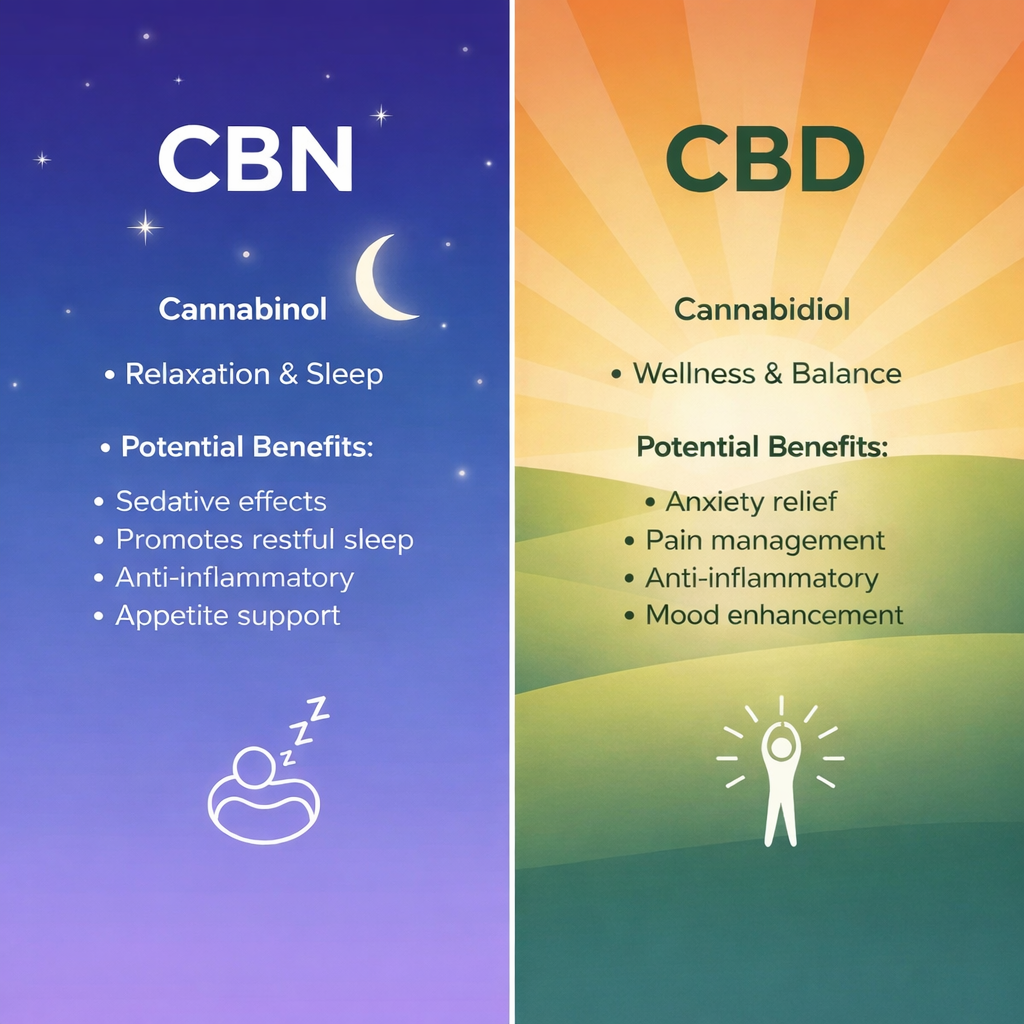
The hemp industry has expanded rapidly in recent years. While most consumers are familiar with CBD, newer compounds are beginning to appear on store shelves. One of the most prominent emerging cannabinoids is CBN.
With so many acronyms circulating in the wellness space, it is easy to become confused. However, understanding the distinct properties of these compounds is essential for finding the right product for your needs. While they share a similar origin, CBN and CBD interact with the body differently and serve unique purposes.
This guide breaks down the science, benefits, and differences between these two cannabinoids to help you make an informed decision for your health regimen.
The Basics of Cannabinoids
To understand the difference between CBN and CBD, you first need to understand where they come from. Both are cannabinoids, which are chemical compounds found naturally in the cannabis plant.
There are over 100 identified cannabinoids in the hemp plant. These compounds interact with the human body through the endocannabinoid system (ECS). The ECS is a complex cell-signaling system that plays a role in regulating a range of functions and processes, including sleep, mood, appetite, memory, and reproduction.
When you consume hemp products, cannabinoids bind to or influence receptors in the ECS, helping to maintain homeostasis, or balance, within the body. While THC is the cannabinoid known for causing a "high," both CBD and CBN offer therapeutic potential without the intense intoxicating effects associated with marijuana.
What is CBD?
CBD, or cannabidiol, is the second most prevalent active ingredient in cannabis (marijuana) and is derived directly from the hemp plant. It is currently the most widely researched and utilized non-psychoactive cannabinoid on the market.
How it Works
CBD does not bind directly to the main cannabinoid receptors (CB1 and CB2) in the same way THC does. Instead, it influences them indirectly. This interaction helps boost the body’s own naturally occurring endocannabinoids. Because it does not bind directly to CB1 receptors in the brain, CBD is non-intoxicating. You will not feel a "high" or impairment when using it.
Primary Benefits
CBD is often referred to as the "multivitamin" of the hemp world due to its versatility. Users typically turn to CBD for:
- Stress Management: Many users report a sense of calm and relaxation, making it a popular choice for managing daily stressors.
- Physical Discomfort: CBD is frequently used to support recovery from exercise-induced inflammation or general physical discomfort.
- Focus and Clarity: Lower doses of CBD can promote mental clarity without the jittery side effects of caffeine.
What is CBN?
CBN, or cannabinol, was actually the first cannabinoid to be isolated by scientists, yet it has received less attention than CBD until recently.
How it Works
The origin of CBN is distinct from CBD. CBN is created through the oxidation of THC. When THC is exposed to heat, light, and oxygen over time, it breaks down and converts into CBN. This is why aged cannabis plants tend to have higher levels of CBN.
Because it is a byproduct of THC, CBN does bind to the body’s CB1 receptors, though roughly one-tenth as strongly as THC. This means that while CBN is technically psychoactive, the effects are extremely mild compared to THC. Most users do not report feeling high, but sensitive individuals may notice very slight sedation.
Primary Benefits
While research is still ongoing, anecdotal evidence and early studies suggest CBN has specific applications, particularly regarding rest.
- Sleep Support: CBN is widely marketed as the "sleepy cannabinoid." It is believed to have powerful sedative properties, making it a primary ingredient in nighttime hemp formulas.
- Relaxation: Similar to CBD, CBN may help relax the body, but its effects tend to be more physical and heavy, rather than the mental clarity often associated with CBD.
Comparing the Two: The Key Differences
While both compounds support the endocannabinoid system, their applications differ significantly. Here is a direct comparison of how they function.
1. Origin and Extraction
This is the most technical difference. CBD exists as a major compound in the living hemp plant. Manufacturers extract it directly from the plant material.
CBN typically exists in trace amounts in fresh plants. To get substantial quantities of CBN for products, producers must expose THC or CBD to specific conditions (heat and oxidation) to convert it. This makes CBN rarer and sometimes more expensive to produce than standard CBD.
2. The Experience
The feeling of taking these two compounds is distinct.
- CBD is generally described as "grounding." It does not typically induce drowsiness during the day. It helps you feel normal, balanced, and capable of handling daily tasks.
- CBN is generally described as "sedating." It is more likely to make you feel physically heavy or drowsy. Consequently, CBN is rarely recommended for morning or mid-day use.
3. Research Availability
CBD has been the subject of numerous clinical studies and is approved in specific pharmaceutical forms for treating epilepsy. The safety profile and effects of CBD are well-documented.
CBN research is in earlier stages. While historical data exists, human clinical trials specifically targeting CBN for sleep are less abundant than those for CBD. Much of the current usage is driven by user reports and preliminary animal studies.
The Entourage Effect: Better Together?
You do not necessarily have to choose one over the other. In the hemp industry, there is a concept called the "entourage effect." This theory suggests that cannabinoids work more effectively when taken together rather than in isolation.
Many high-quality sleep products combine CBD and CBN. The CBD addresses underlying tension or physical discomfort that might keep you awake, while the CBN provides the sedative nudge to help you fall asleep. When formulated with other terpenes (aromatic compounds in the plant) like Linalool or Myrcene, the effects can be even more pronounced.
Which One Should You Choose?
Deciding between CBD and CBN depends entirely on your wellness goals.
Choose CBD if:
- You are looking for a daily supplement to support overall wellness.
- You need help managing nervousness or stress before a meeting or event.
- You want to support healthy recovery after workouts.
- You need to stay alert and focused throughout the day.
Choose CBN if:
- Your primary struggle is falling asleep or staying asleep.
- You are looking for a nighttime-specific supplement.
- You have tried CBD for sleep but found it wasn't sedating enough.
- You are looking for deep physical relaxation before bed.
Navigating Product Selection
Regardless of which cannabinoid you choose, quality is the most important factor. The hemp market is largely unregulated, meaning that labels can sometimes be inaccurate.
Always look for products that have been third-party lab tested. These authentications, often called Certificates of Analysis (COAs), verify that the product contains the amount of CBD or CBN stated on the label and is free from harmful contaminants like pesticides or heavy metals.
At NOVA Hemp, we prioritize transparency and efficacy. Whether you are looking for the balancing properties of CBD or the restorative potential of CBN, our products are formulated to deliver consistent results.
Final Thoughts
The difference between CBN and CBD ultimately comes down to day versus night. CBD is your versatile tool for daytime balance, stress management, and recovery. CBN is your specialist for nighttime rest and sedation. By understanding these distinctions, you can curate a hemp routine that supports your body’s natural rhythms around the clock.



Share:
What is A CBG Tincture?
The Founding Fathers of Hemp